
Protein Molecular Weight Markers

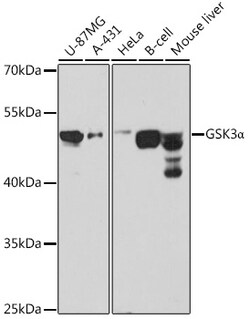
ABclonal Technology GSK3α Rabbit pAb

This gene encodes a multifunctional Ser/Thr protein kinase that is implicated in the control of several regulatory proteins including glycogen synthase, and transcription factors, such as JUN. It also plays a role in the WNT and PI3K signaling pathways, as well as regulates the production of beta-amyloid peptides associated with Alzheimers disease.

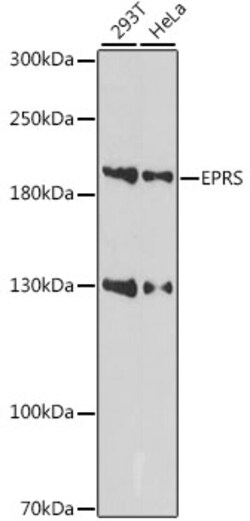
ABclonal Technology EPRS Rabbit pAb
Aminoacyl-tRNA synthetases are a class of enzymes that charge tRNAs with their cognate amino acids. The protein encoded by this gene is a multifunctional aminoacyl-tRNA synthetase that catalyzes the aminoacylation of glutamic acid and proline tRNA species. Alternative splicing has been observed for this gene, but the full-length nature and biological validity of the variant have not been determined.
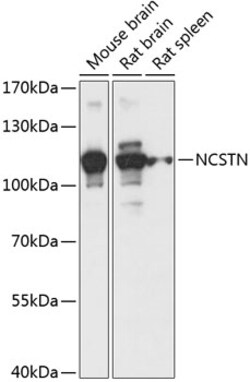
ABclonal Technology NCSTN Rabbit pAb
This gene encodes a type I transmembrane glycoprotein that is an integral component of the multimeric gamma-secretase complex. The encoded protein cleaves integral membrane proteins, including Notch receptors and beta-amyloid precursor protein, and may be a stabilizing cofactor required for gamma-secretase complex assembly. The cleavage of beta-amyloid precursor protein yields amyloid beta peptide, the main component of the neuritic plaque and the hallmark lesion in the brains of patients with Alzheimers disease, however, the nature of the encoded proteins role in Alzheimers disease is not known for certain. Mutations in this gene are associated with familial acne inversa. A pseudogene of this gene is present on chromosome 21. Alternatively spliced transcript variants of this gene have been described, but the full-length nature of some of these variants has not been determined.
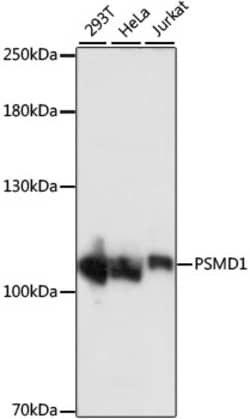
ABclonal Technology PSMD1 Rabbit pAb
The 26S proteasome is a multicatalytic proteinase complex composed of a 20S core and a 19S regulator. The 20S core has 4 rings made of 28 subunits, including 7 alpha and 7 beta subunits in each ring. The 19S regulator consists of a base with 6 ATPase subunits and 2 non-ATPase subunits, and a lid with up to 10 non-ATPase subunits. Proteasomes, found throughout eukaryotic cells, cleave peptides in an ATP/ubiquitin-dependent process in a non-lysosomal pathway. A modified form, the immunoproteasome, processes class I MHC peptides. This gene encodes the largest non-ATPase subunit of the 19S regulator lid, responsible for substrate recognition and binding. Evidence suggests interactions with viral proteins, including coronaviruses. Alternative splicing produces multiple transcript variants.
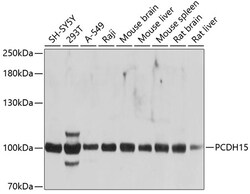
ABclonal Technology PCDH15 Rabbit pAb
This gene is a member of the cadherin superfamily. Family members encode integral membrane proteins that mediate calcium-dependent cell-cell adhesion. It plays an essential role in maintenance of normal retinal and cochlear function. Mutations in this gene result in hearing loss and Usher Syndrome Type IF (USH1F). Extensive alternative splicing resulting in multiple isoforms has been observed in the mouse ortholog. Similar alternatively spliced transcripts are inferred to occur in human, and additional variants are likely to occur.
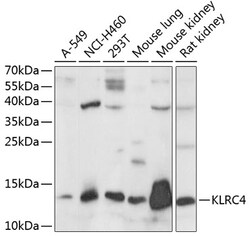
ABclonal Technology KLRC4 Rabbit pAb
Natural killer (NK) cells are lymphocytes that can mediate lysis of certain tumor cells and virus-infected cells without previous activation. They can also regulate specific humoral and cell-mediated immunity. NK cells preferentially express several calcium-dependent (C-type) lectins, which have been implicated in the regulation of NK cell function. This gene is a member of the NKG2 group of genes that are expressed primarily in natural killer (NK) cells. These family members encode transmembrane proteins that are characterized by a type II membrane orientation (have an extracellular C-terminus) and the presence of a C-type lectin domain. This family member is located within the NK complex, a region that contains several C-type lectin genes preferentially expressed in NK cells. Read-through transcription exists between this gene and the downstream KLRK1 (killer cell lectin-like receptor subfamily K, member 1) family member.
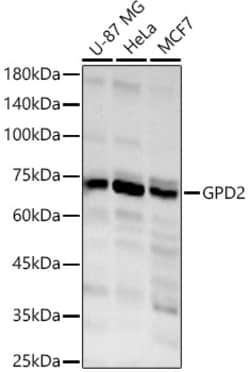
ABclonal Technology GPD2 Rabbit pAb
The protein encoded by this gene localizes to the inner mitochondrial membrane and catalyzes the conversion of glycerol-3-phosphate to dihydroxyacetone phosphate, using FAD as a cofactor. Along with GDP1, the encoded protein constitutes the glycerol phosphate shuttle, which reoxidizes NADH formed during glycolysis. Two transcript variants encoding the same protein have been found for this gene.
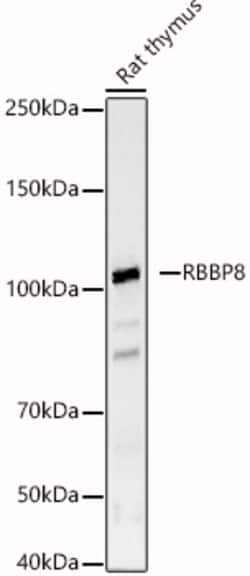
ABclonal Technology RBBP8 Rabbit pAb
The protein encoded by this gene is a ubiquitously expressed nuclear protein. It is found among several proteins that bind directly to retinoblastoma protein, which regulates cell proliferation. This protein complexes with transcriptional co-repressor CTBP. It is also associated with BRCA1 and is thought to modulate the functions of BRCA1 in transcriptional regulation, DNA repair, and/or cell cycle checkpoint control. It is suggested that this gene may itself be a tumor suppressor acting in the same pathway as BRCA1. Three transcript variants encoding two different isoforms have been found for this gene. More transcript variants exist, but their full-length natures have not been determined.
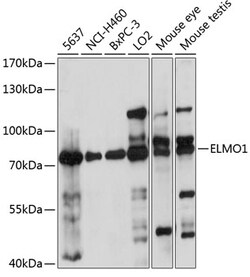
ABclonal Technology ELMO1 Rabbit pAb
This gene encodes a member of the engulfment and cell motility protein family. These proteins interact with dedicator of cytokinesis proteins to promote phagocytosis and cell migration. Increased expression of this gene and dedicator of cytokinesis 1 may promote glioma cell invasion, and single nucleotide polymorphisms in this gene may be associated with diabetic nephropathy. Alternative splicing results in multiple transcript variants.
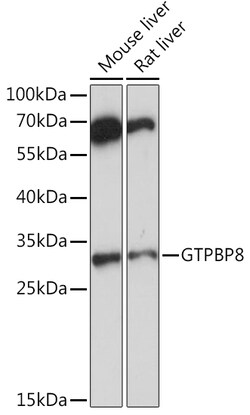
ABclonal Technology GTPBP8 Rabbit pAb
Predicted to enable GTP binding activity and metal ion binding activity. Located in mitochondrion.

Biotium Histiocytoma Marker(D11), CF740 conjugate, 0.1mg/mL
In Western blotting, this antibody detects an antigen of 125 kDa in human liver and 135 kDa in tumors of histiocytic origin. Comparative study of this MAb and a standard CD68 MAb showed that their antigens are different. Its antigen in all macrophage types studied is located on the plasma membrane and within cytoplasmic structures including lysosomes. This MAb shows a restricted reactivity to cells of the monocyte/macrophage system. It specifically reacts with blood monocytes and stains resident macrophages in a wide variety of human tissues. This MAb does not stain antigen-presenting cells, e.g., Langerhans cells. Reportedly, its reactivity is restricted to histiocytes and macrophages.Primary antibodies are available purified, or with a selection of fluorescent CF Dyes and other labels. CF Dyes offer exceptional brightness and photostability. Note: Conjugates of blue fluorescent dyes like CF405S and CF405M are not recommended for detecting low abundance targets, because
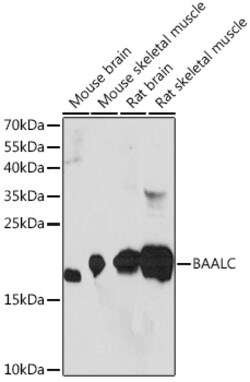
ABclonal Technology BAALC Rabbit pAb
This gene was identified by gene expression studies in patients with acute myeloid leukemia (AML). The gene is conserved among mammals and is not found in lower organisms. Tissues that express this gene develop from the neuroectoderm. Multiple alternatively spliced transcript variants that encode different proteins have been described for this gene, however, some of the transcript variants are found only in AML cell lines.
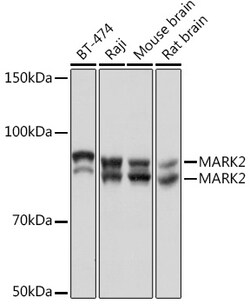
ABclonal Technology MARK2 Rabbit mAb
This gene encodes a member of the Par-1 family of serine/threonine protein kinases. The protein is an important regulator of cell polarity in epithelial and neuronal cells, and also controls the stability of microtubules through phosphorylation and inactivation of several microtubule-associating proteins. The protein localizes to cell membranes. Multiple transcript variants encoding different isoforms have been found for this gene.
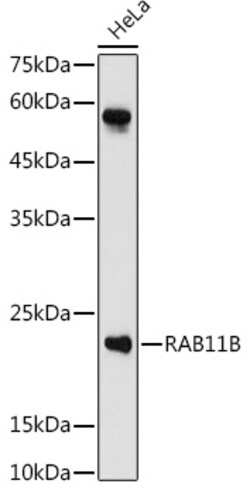
ABclonal Technology RAB11B Rabbit pAb
The Ras superfamily of small GTP-binding proteins, which includes the Ras (see MIM 190020), Ral (see MIM 179550), Rho (see MIM 165390), Rap (see MIM 179520), and Rab (see MIM 179508) families, is involved in controlling a diverse set of essential cellular functions. The Rab family, including RAB11B, appears to play a critical role in regulating exocytotic and endocytotic pathways (summary by Zhu et al., 1994 [PubMed 7811277]).
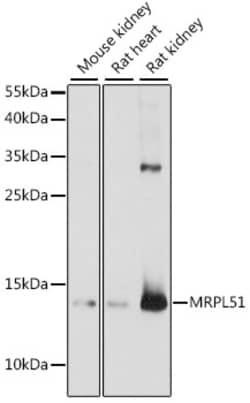
ABclonal Technology MRPL51 Rabbit pAb
Mammalian mitochondrial ribosomal proteins are encoded by nuclear genes and help in protein synthesis within the mitochondrion. Mitochondrial ribosomes (mitoribosomes) consist of a small 28S subunit and a large 39S subunit. They have an estimated 75% protein to rRNA composition compared to prokaryotic ribosomes, where this ratio is reversed. Another difference between mammalian mitoribosomes and prokaryotic ribosomes is that the latter contain a 5S rRNA. Among different species, the proteins comprising the mitoribosome differ greatly in sequence, and sometimes in biochemical properties, which prevents easy recognition by sequence homology. This gene encodes a 39S subunit protein. Pseudogenes corresponding to this gene are found on chromosomes 4p and 21q.